
Foreclosure Bailout Loans
A foreclosure bailout loan is short-term financing that can be used to pay off the foreclosing lender before a completed foreclosure sale. Approval is driven primarily by the equity in the property and its marketability. There is no minimum credit score. GreenBridge reviews scenarios from $50,000 to $30,000,000 across 31 states, on business-purpose property.

Credit Score
No Minimum
Term
6 to 36 months
Loan Amount
$50,000 to $30,000,000
Where We Lend
31 States
Leverage
Up to 65% LTV
Timing
7 to 10 business days
Business purpose only, and residential properties must be non-owner-occupied. Closing timelines depend on title condition, the valuation required and how quickly conditions are cleared. Not every transaction qualifies for the maximum loan-to-value.
What is a foreclosure bailout loan?
A foreclosure bailout loan pays off the debt owed to the foreclosing lender before the property is sold, which allows the foreclosure to be resolved and replaces the defaulted debt with short-term financing. The new loan is underwritten primarily on the equity and marketability of the property rather than on conventional payment-history requirements.
How does a foreclosure bailout loan work?
The transaction follows the same path as any refinance, with the payoff figure driving the timeline.

1. Payoff figures
The payoff includes the principal balance plus any additional costs, such as accrued interest, attorney fees or late fees. It is often higher than expected, so the first step is establishing the actual figure rather than working from an estimate.

2. Preliminary underwriting
The full scenario is reviewed and confirmed workable, subject to value and clear title. This happens before you pay for an appraisal or valuation, so you are not spending money on a transaction that was never going to come together.

3. Valuation and title review
Valuation and title work run in parallel. The valuation confirms the value, which sets the maximum loan amount available against the payoff. Title identifies liens, judgments and recording issues early, while there is still time to resolve them.

4. Closing and funding
Once the remaining conditions are cleared, closing is scheduled. At funding, the title company pays off the foreclosing lender directly. The existing debt is satisfied, the foreclosure is resolved, and the new loan is in place with the exit already discussed.
Who funds a foreclosure bailout loan?
Every scenario is reviewed by GreenBridge and evaluated against our lending guidelines. Where it fits, we fund it directly. Where it does not, we arrange the financing through the GreenBridge Lending Network, which is what allows us to work with situations a single lender would turn down outright. The review is the same either way, and the structure follows the scenario rather than the scenario being forced into a structure.
Can you still get financing once foreclosure has started?
Borrowers come to us at every stage, from a second missed payment through a scheduled sale date. Earlier is easier. What matters most is how much time remains, where the property is located, what type of property it is, the payoff amount relative to value, and the condition of title. Foreclosure timelines also vary enormously by state.
What if you are behind but not in foreclosure yet?
It is worth a conversation before assuming you need short-term money. If you can bring the existing loan current, you may qualify for our 30-year fixed program directly. There is no minimum credit score, and at or below 50% LTV the number of past mortgage lates does not matter as long as the loans are current when the new financing closes. That skips the short-term step entirely, which is both cheaper and more durable.
Who qualifies for a foreclosure bailout loan?
Qualification focuses on equity first. Borrowers with meaningful equity in a property with real market demand are the strongest candidates, regardless of credit. There is no universal minimum credit score, and most scenarios require little income documentation. The property must be business purpose, and a personal guarantee is required.
Property types and locations
Eligible residential property is single-family, condos, townhouses and 2 to 4 units.
Multifamily, mixed-use, and commercial property is equally eligible.
Land, agricultural, rural properties, and manufactured or mobile homes are considered on a case-by-case basis. Property location and marketability are part of the review on every scenario.
How much can you borrow against a property in foreclosure?
Foreclosure bailout transactions are capped at 65% LTV. Things such as a soft local market, vacancy, an unfinished renovation or unusual collateral may affect the maximum loan-to-value available on a given transaction, since every scenario is reviewed on its own merits.
If the payoff plus closing costs exceeds what the equity on one property supports, additional real estate can sometimes be pledged. Whether a specific property works depends on how that transaction is structured, so it is reviewed as part of your scenario rather than against a general list.

How fast can a foreclosure bailout close?
A well-prepared transaction can sometimes close in 7 to 10 business days, when the application and supporting documents are complete, title and payoff figures are ready, and any required inspection or valuation can be scheduled promptly. Transactions that need additional title work, a full appraisal or further underwriting conditions take longer.
Title condition is the most common reason a timeline extends. If you already have a completed title report, often from a refinance that did not close, you start at the fast end of that range.
What does a foreclosure bailout loan cost?
Rates start around 11% and are quoted per transaction. Three things drive where a scenario prices: where the property is located, what type of property it is, and the payoff amount relative to the property's value. Payments are interest only. GreenBridge origination is based on loan amount, and additional lender and third-party fees may apply. Fees vary by transaction and are disclosed with your loan terms.
What happens when the bailout loan matures?
This is the question that matters most and the one most borrowers skip. Stopping the foreclosure solves the emergency. It does not solve the problem, and a short-term loan that matures with nothing lined up behind it can put you right back where you started.
There are two ways out, refinancing or selling, and it is worth deciding early which one you are working toward.

If you plan to keep it, the goal is permanent financing rather than another short-term loan. Short-term money is meant to be transitional, and the transition here is out of foreclosure and into something stable. A recent foreclosure narrows the lenders willing to look at the file, which is why the takeout is worth identifying before the bailout loan closes rather than after.

If you plan to sell, the term needs to leave enough room to list the property, find a buyer and close, which is usually longer than people estimate.
GreenBridge can sometimes provide both the short-term bailout and the long-term exit financing. Our long-term program offers 30-year fixed financing with no minimum credit score, on residential one to four unit property and on commercial real estate including multifamily, mixed use, retail, office, warehouse and light industrial, self-storage, commercial condo, automotive and daycare. At or below 50% LTV the number of past mortgage lates does not matter as long as the loans are current when the new financing closes. You can be eligible for review as soon as the foreclosure is resolved, including the day your bailout loan closes, subject to the property, the leverage and the rest of the review.
Where leverage is higher than 50%, the options are a sale, a paydown that brings leverage into range, pledging additional eligible real estate, or a longer short-term structure while the property stabilizes. A higher LTV on the subject property is not automatically the end of the conversation.
The exit is discussed up front and revisited during the term rather than left until the note comes due.
What if a foreclosure bailout loan is not the right option?
It is worth knowing the alternatives before taking on short-term debt.
Reinstatement. If you can cover the arrears plus fees, reinstating the existing loan is cheaper than replacing it. This is the best outcome available and the first thing to check.
A negotiated payoff or forbearance. Some lenders will agree to a modified payment arrangement or accept a discounted payoff. It costs nothing to ask before assuming they will not.
Selling the property. If the equity is strong and you were planning to exit anyway, a sale before the foreclosure sale date preserves that equity without new debt.
Permanent financing. If the loan can be brought current and the leverage is low enough, refinancing straight into a 30-year fixed loan skips the short-term step entirely.
Legal advice. If a sale date is set, or bankruptcy is something you are weighing, that is a conversation for a foreclosure attorney and not for a lender.
We will tell you when one of these is the better path. A bailout loan makes sense when there is real equity, a defined exit and not enough time for the conventional route.
Common situations
The following are anonymized examples of transactions GreenBridge has worked on. Details have been changed to protect borrower privacy.
A partnership loss led to a default
The situation
An investor lost a significant amount of money when a business partner mishandled a deal in another state. He fell behind on one of his rental properties and the lender started foreclosure. When the appraisal came back lower than expected, the loan no longer fit inside the 65% limit, and covering the difference in cash was not realistic for him at that moment.
How we made it work
He owned another investment property, vacant and in need of minor work. Pledging both properties brought the leverage into range. The foreclosing lender was paid off and he still walked away from closing with roughly $50,000. A year later, having stuck to the plan set at the outset, that borrower has refinanced into permanent long-term financing.
A medical crisis put two rentals behind
The situation
A borrower hit a serious health setback and reached the point where he had to choose what to keep paying. Two rental mortgages held by the same bank were what gave way. By the time his situation had stabilized, the bank was already pursuing foreclosure and would not work with him. He was also honest that he needed another four to six months before he could comfortably carry a payment again.
How we made it work
The equity was strong and the appraisal supported it, so the foreclosure was paid off on both properties. The loan was then structured with six months of payments set aside at closing. He kept the properties, cleared the foreclosure, and had half a year of breathing room built into the loan rather than a new obligation starting the day it funded.
A matured loan with no way to refinance
The situation
The borrower could not arrange new financing before his loan reached maturity. The lender granted a three-month extension, which came and went while he was still looking. After maturity the lender stopped accepting payments altogether, so a borrower who was willing and able to pay had no way to stay current, and the foreclosure process began.
How we made it work
He was never unable to pay. His loan came due and he could not replace it in time, which is a different problem than falling behind, and we treated it that way. The existing lender was taken out and the borrower got a defined window to refinance on realistic terms. This is the most common situation we see.
Frequently Asked Questions
Can I get a foreclosure bailout loan with bad credit?
Does this work on my primary residence?
Can you help if a sale date is already scheduled?
Is the property required to be occupied?
What if I have more than one property in foreclosure?
Can I pay the loan off early?
What states do you lend in?

About GreenBridge Loans
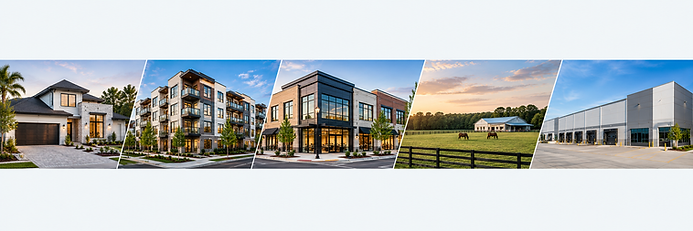
GreenBridge Loans has been providing business-purpose financing to real estate investors and business owners since 2020, working in 31 states. We lend on business-purpose transactions only, on investment and commercial real estate. Where a scenario fits our own guidelines we fund it directly, and where it does not we provide financing through the GreenBridge Lending Network.
Last materially updated on September 19, 2026.